
✨ Nursing Note A&P – Introduction✨
An Introduction to Anatomy and Physiology

前言
嗨嗨大家,我是薇布啦!
先別被一大堆英文嚇到
由於很多人考美國護理師執照NCLEX-RN的需求,問我有沒有英文版的筆記
然後,我同學們都說我的英文筆記,比他們那些英文母語者整理得還好,所以決定慢慢分享上來了!
注意事項:本人的筆記有時候方便閱讀,會把一些不重要的字刪去,導致英文文法不是完全正確
Define
Anatomy: study of body structures
Gross anatomy: study of anatomy by dissecting a cadaver
Systemic anatomy: study of structure of organ systems
Clinical anatomy: clinical practice
Microscopic anatomy:
Cytology: study of internal structure of individual cells
Histology: examination of tissues
Physiology: study of body functions
Cell physiology: study of functions of cells
Organ physiology: study of function of specific organs
Systemic physiology: all aspects of functioning of specific organ systems
Pathological physiology: study of effects of diseases on organ functions or system functions
signs: objective disease indication, fever
symptoms: subjective disease indication, tiredness
Levels of organization
Atoms > Cells > Tissue > Organs > Organ system > Organism
Homeostasis
keep internal environment within certain limits
Failure results in disease
Three regulatory mechanisms
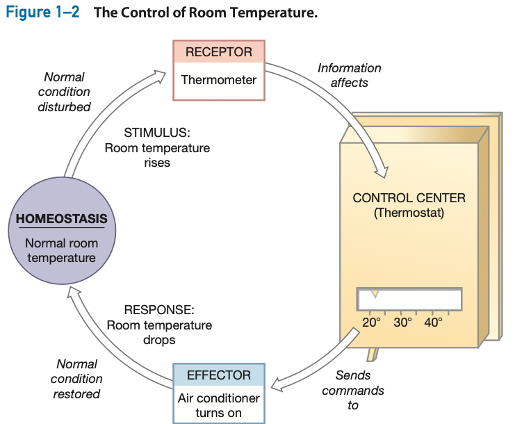
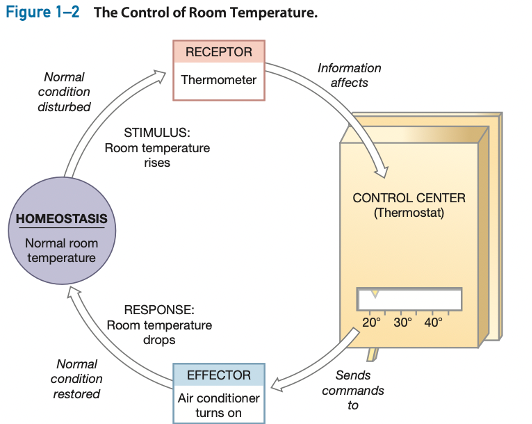
Receptor: a sensor that is sensitive to a particular stimulus or environmental change
Control center: receives information supplied by receptor > sends out commands
Effector: a cell or organ that responds to commands of control center > activity either opposes or enhances stimulus
Autoregulation: cell, tissue, organ, organ system adjusts in response to some environmental change
e.g., O2 drop > vessels dilation > blood flood increase > O2 increase
Extrinsic regulation: activities of nervous system(signal) or endocrine system(messenger)
e.g., exercise > O2 more in muscles
nervous system > increase heart rate
endocrine system > decrease other organs active (GI)
Positive feedback: initial stimulus produces a response that exaggerates or enhances original change
e.g., homeostatic mechanisms > infection, injury, genetic abnormality
positive feedback loop: complete a dangerous process quickly to reestablish homeostasis
Negative Feedback: a way of counteracting a change
Anatomical terms
anatomical position: hands at sides, palms facing forward, feet together
Supine: face up
Prone: face down
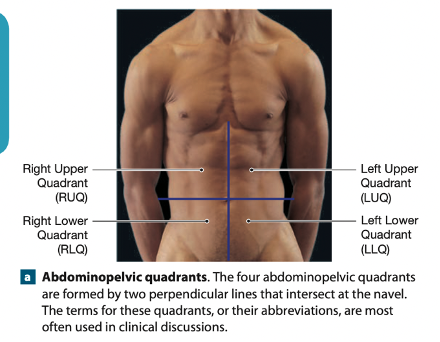
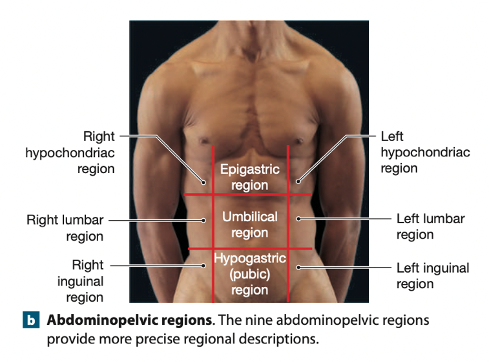
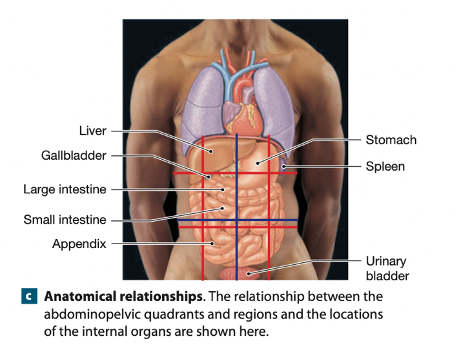
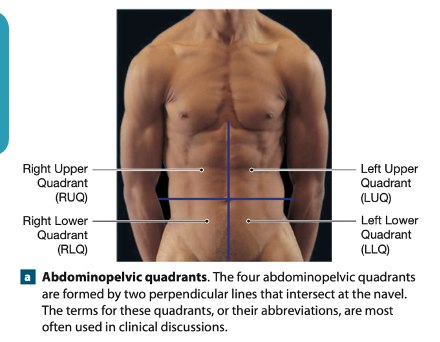
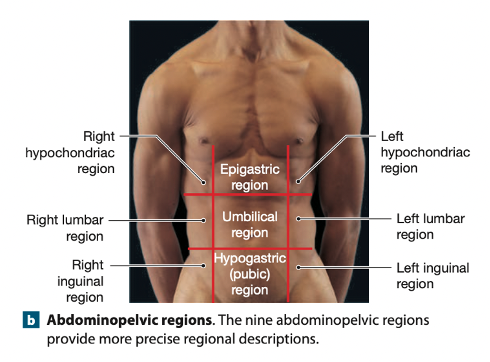
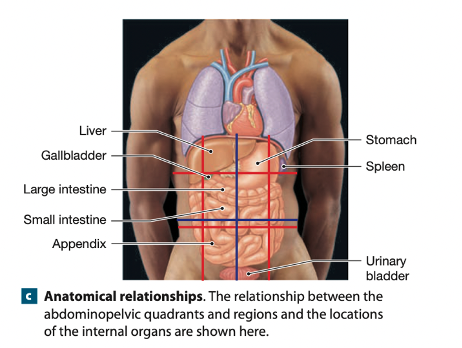
Anatomical Regions: abdominopelvic quadrants, abdominopelvic regions
Sectional anatomy
Frontal / Coronal Plane: separates anterior and posterior portions of body
Sagittal Plane: passes through midline. separates body into equal right and left sides
Transverse / horizontal Plane: separates superior and inferior portions of body
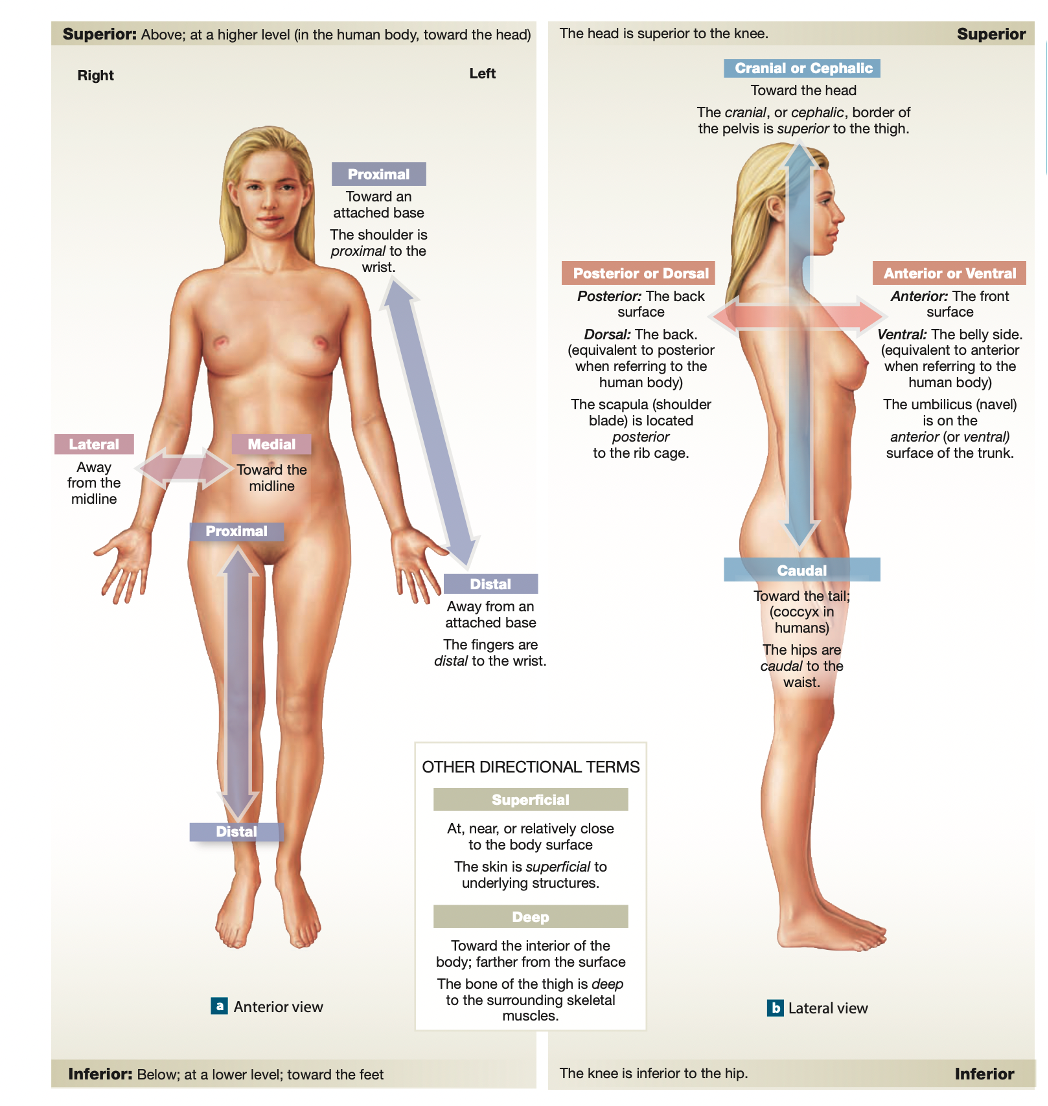
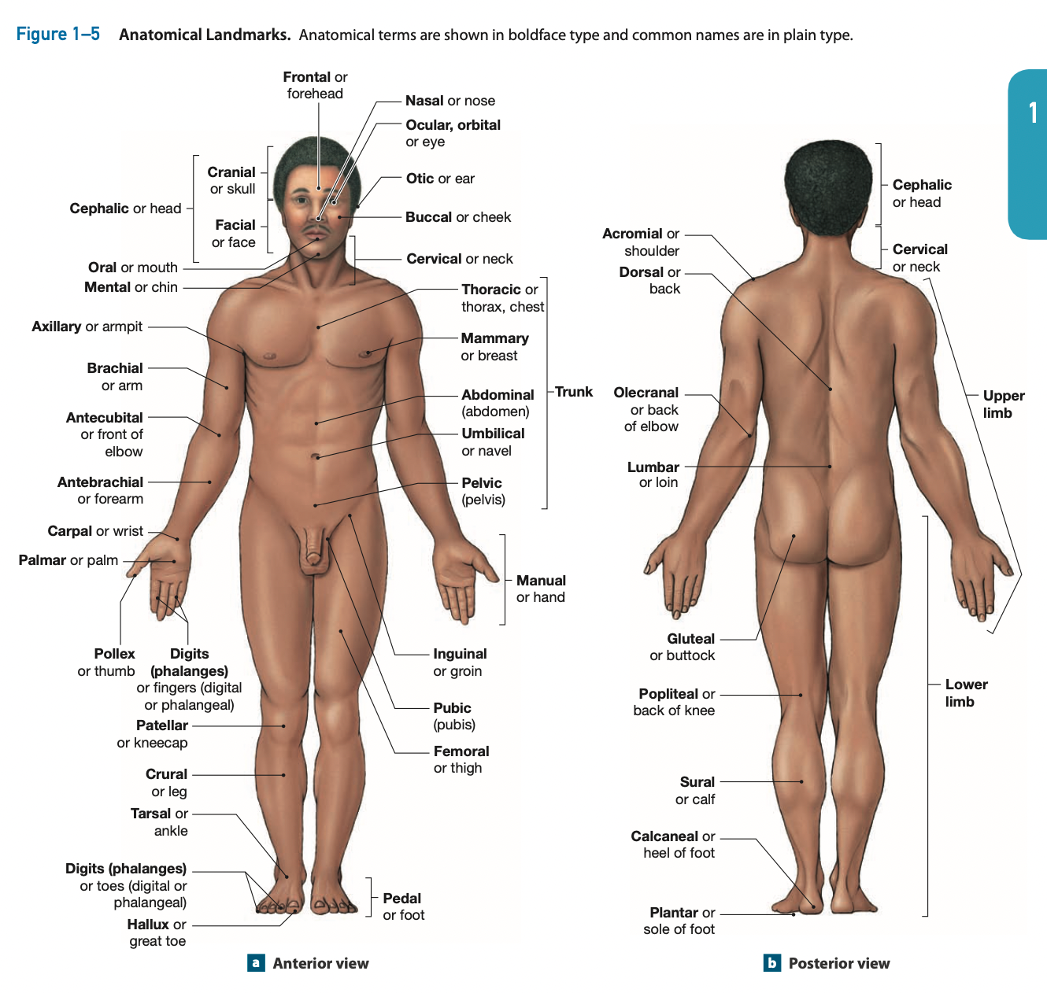
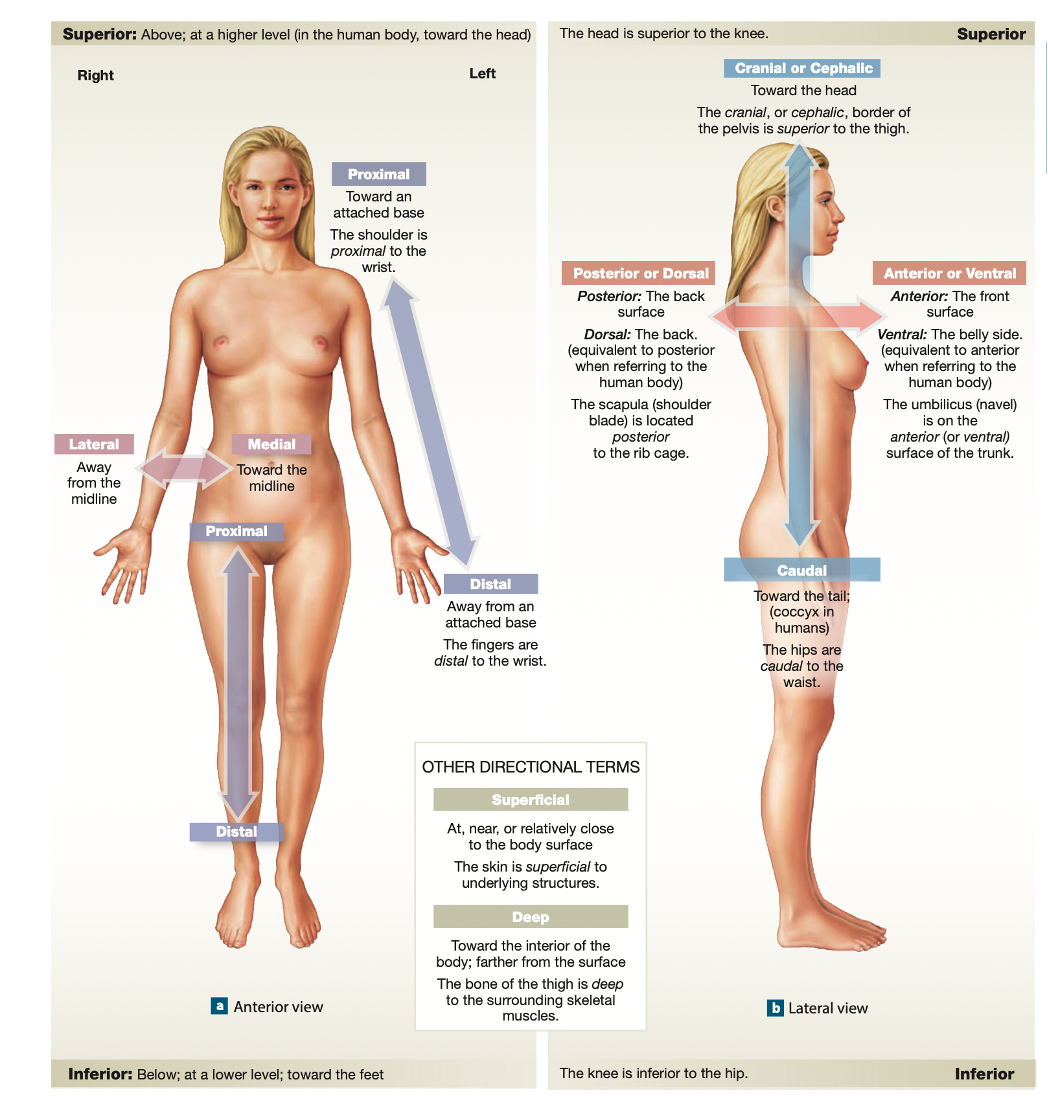
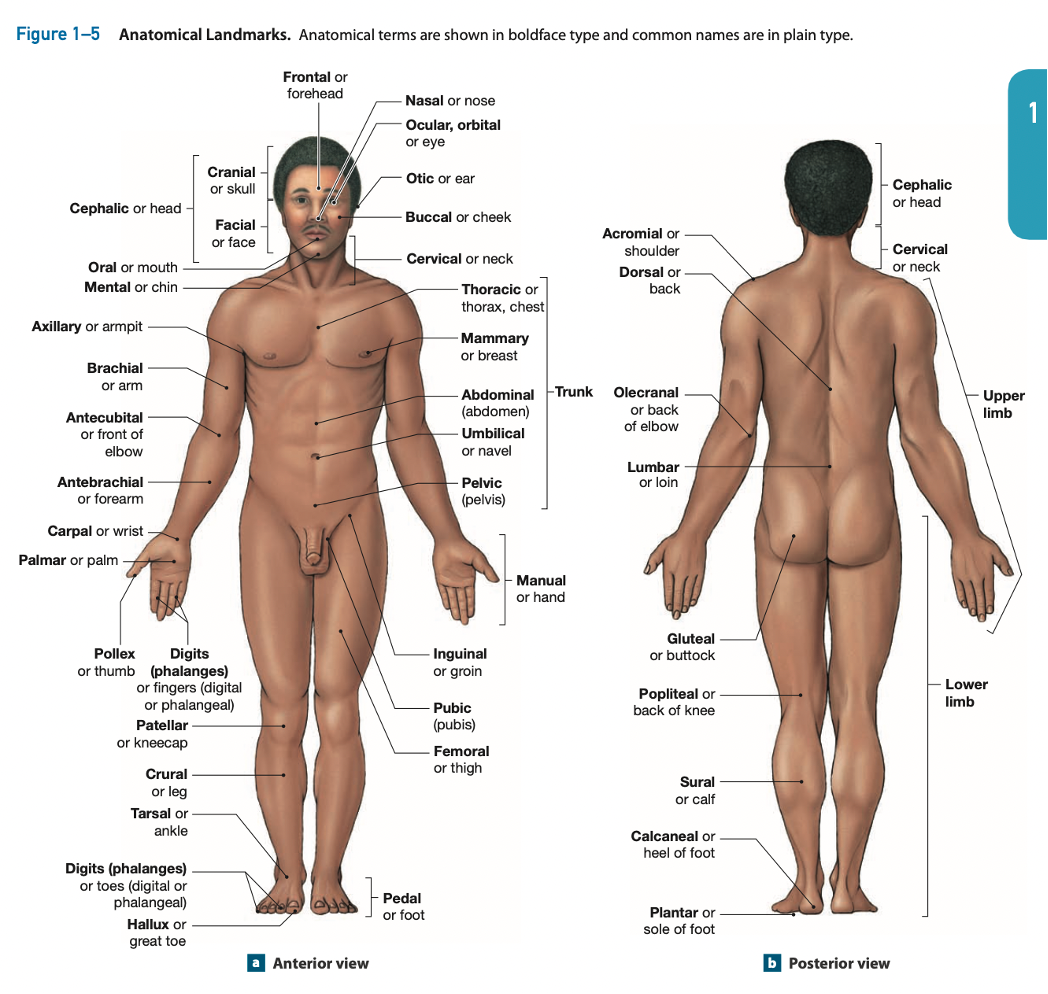
Body cavities:
thoracic, abdominal, pelvic regions
Function: (1) protect delicate organs from shocks and impacts, (2) permit significant changes in size and shape of internal organs.
Thoracic cavity:
two pleural cavities > serous membrane surround two lungs
serous membrane: pleura
outer surface> visceral pleura
mediastinal surface > parietal pleura
mediastinum: separate left and right pleural cavities
connective tissue > surrounds, stabilizes, supports esophagus, trachea, thymus, major blood vessels
Pericardial cavity > heart
serous membrane: pericardium
visceral pericardium > covering heart
parietal pericardium > opposing surface
Diaphragm: separates Thoracic and Abdominopelvic cavity
Abdominopelvic cavity:
Peritonea cavity
a potential space lined by a serous membrane(peritoneum) > inner surface of body wall > narrow space containing a small amount of fluid
separates parietal peritoneum and visceral peritoneum
Abdominal cavity
inferior (toward feet) surface of diaphragm to the level of the superior (toward the head) margins of the pelvis.
Contain: liver, stomach, spleen, small intestine, most of large intestine.
Kidneys, pancreas > lie between peritoneal lining and the muscular wall of abdominal cavity(retroperitoneal)
Pelvic cavity
inferior to abdominal cavity
pelvis bones form walls, muscle layer forms its floor
contain inferior portion of peritoneal cavity
Contain: urinary bladder, various reproductive organs, distal portion of large intestine
Female > ovaries, uterine tubes, uterus.
Male > prostate gland, seminal glands (seminal vesicles)
Reference
Martini, F. H., Nath, J. L., & Bartholomew, E. F. (2018). Fundamentals of anatomy & physiology (11th ed.). Pearson.
Contact Me
Instagram: https://www.instagram.com/weibuh_rn/
Threads: https://www.threads.net/@weibuh_rn
🌼 This note is my personal class note, no profit is made from sharing it
🌼 Whether it‘s exam applications or any questions during preparation, feel free to DM me on IG
🌼If there are errors in the content or copyright issues to contact via email: WeiBuh.RN@gmail.com